Will it help or hurt your future finances?
Debt piles up in a flash. Especially when there’s a family and extended family needing your support.
A personal loan here. A credit card there. Maybe a store account that helped when the kids kept outgrowing things and before long, several payments are coming off your salary every month.
This is where debt consolidation could help, but it is important to understand what it can and cannot do before signing up.
How does debt consolidation work?
Debt consolidation puts several debts into one place.
You take out a new loan to settle some or all of your existing debts. Instead of paying several credit providers every month, you repay the new debt consolidation loan.
That can make your money admin simpler. You may also qualify for a lower interest rate or monthly repayment.
But here’s the important bit: debt consolidation does not make your debt disappear. You still owe the money. You have just organised how you repay it.
Top tip: One payment may make debt easier to manage but be sure to first check what it will really cost you.
A smaller monthly payment isn’t always a saving
This is probably the most important number to check.
Imagine your current debts cost R6 000 a month and a new consolidation loan brings that down to R4 500.
Great, R1 500 back in your monthly budget. But why is the payment lower? If the new loan stretches your debt over several extra years, you could end up paying more interest overall.
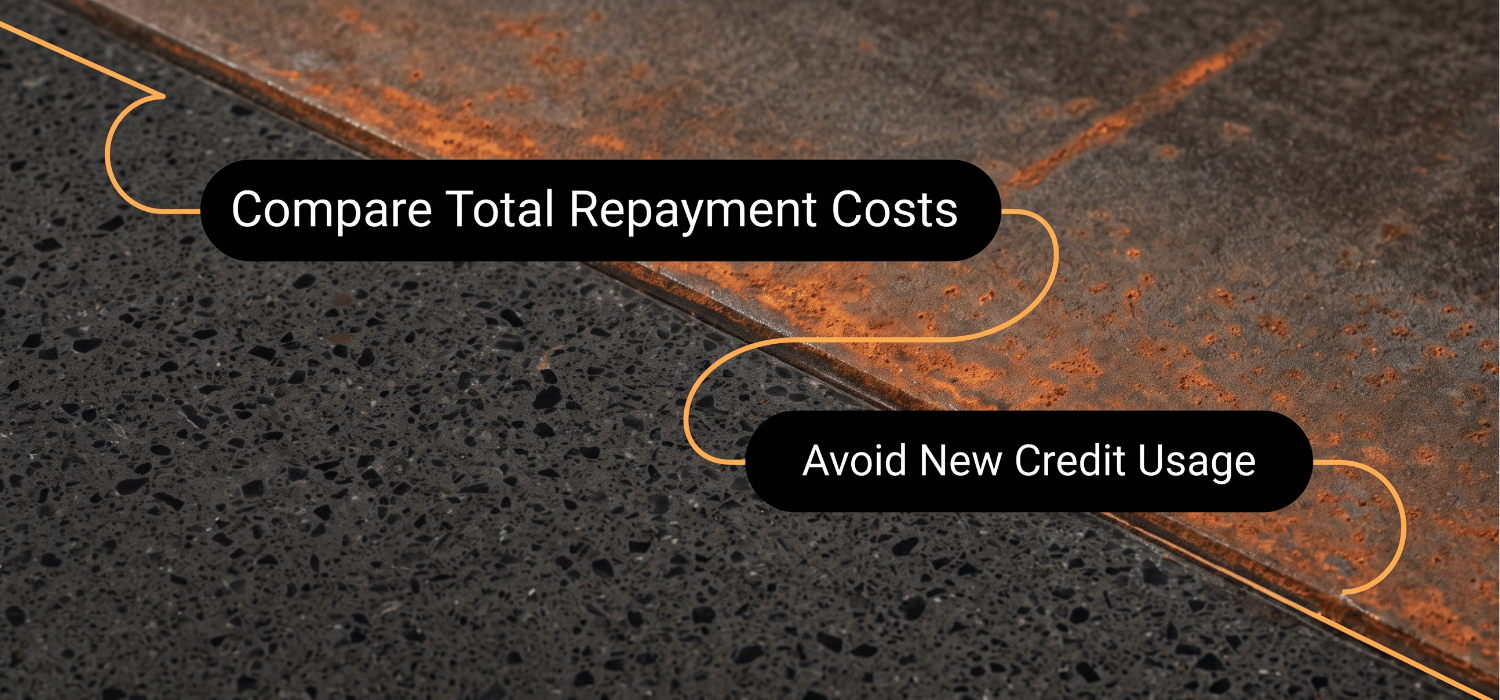
Compare the interest rate, fees, insurance, repayment period and total amount you will repay. A debt consolidation calculator can help you compare the numbers before making a decision.
You still need to qualify for the new loan
Also remember that a consolidation loan in South Africa is still a form of credit.
This means a registered credit provider must do an affordability assessment before giving it to you.
Your income, living expenses, existing debt repayments and credit history can all form part of this assessment. You may also need documents such as your ID, recent bank statements and proof of income.
Your credit profile also affects whether you qualify and the interest rate you’re offered.
Debt consolidation and debt review do different jobs
Understanding debt consolidation vs debt review can save you from choosing the wrong solution to resolve being over your debt limit.
Debt consolidation could suit someone who can still afford their debts but wants to simplify them or possibly get better repayment terms.
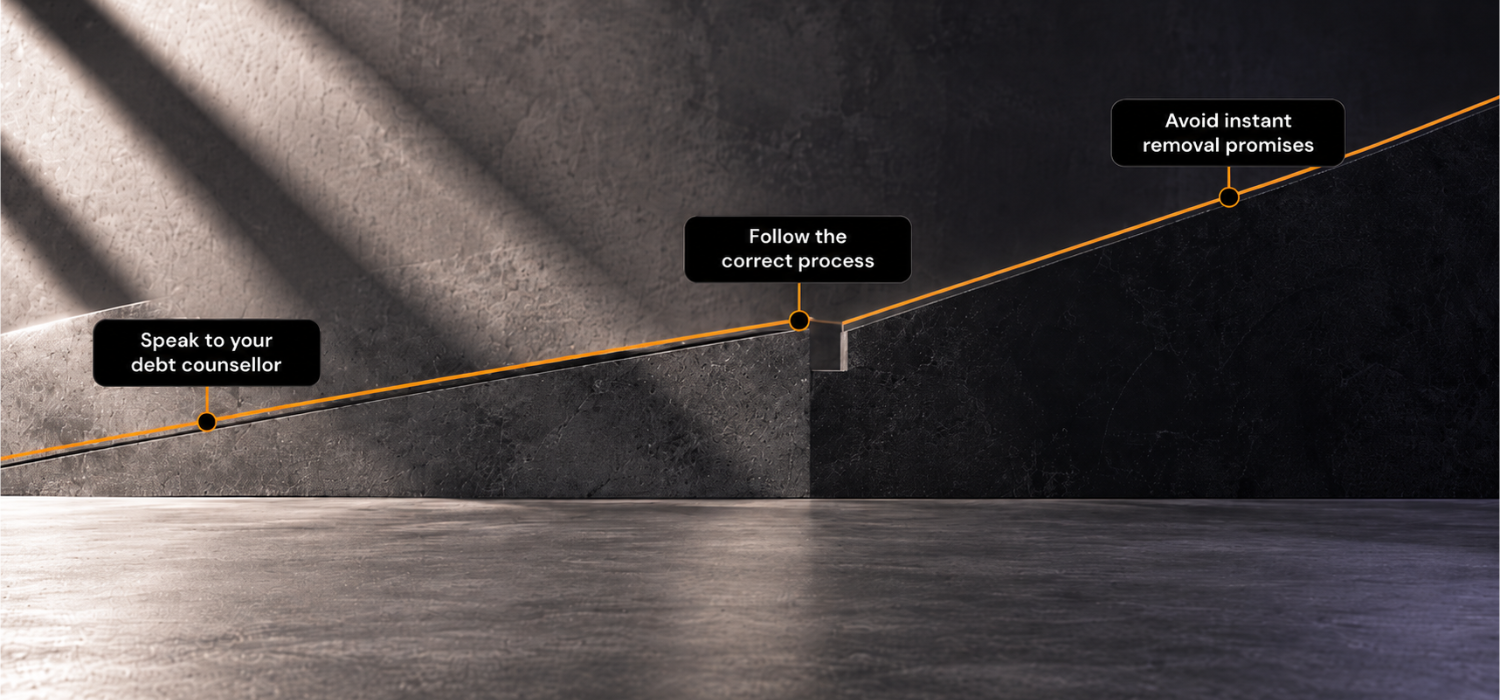
Debt review is different. It’s a formal process under South Africa’s National Credit Act for consumers who are over-indebted. In this process, a registered debt counsellor assesses your finances and, if appropriate, helps restructure your debt repayments.
In principle, if you’re already unable to keep up with your debts, another loan isn’t the answer.
Don’t clear the cards just to fill them again
There’s another debt consolidation trap to keep in mind. Don’t fall for it!
When you’ve paid up a debt and suddenly your credit card or store account has space available again, don’t spend again on it. Using it can leave you with the consolidation loan and fresh debt.
So, before consolidating, work out why the debt built up and if the new monthly payment genuinely fits your budget.
A good goal in debt management isn’t to have fewer debit orders. It’s to owe less over time.
Check your credit position before taking on another loan
Thinking about debt consolidation? Start by knowing what lenders may see when you apply.
Finance365 gives you access to your latest credit score and credit report so you can see your current credit position, check the accounts listed against your name and make a more informed decision about your next move.