Solutions for South Africans
A major concern for many people under debt review is: “What happens if I can’t pay my debt review?”
When you first go into debt review, the plan is to make your debt repayments more affordable. But what happens when even those payments become too much?
Perhaps your salary has been cut. Or maybe the cost of living has risen so much that your budget no longer works.
These things happen, but the important thing is not to ignore the problem. There may be ways to deal with it, depending on your circumstances.
Stopping payments could make your debt problems worse
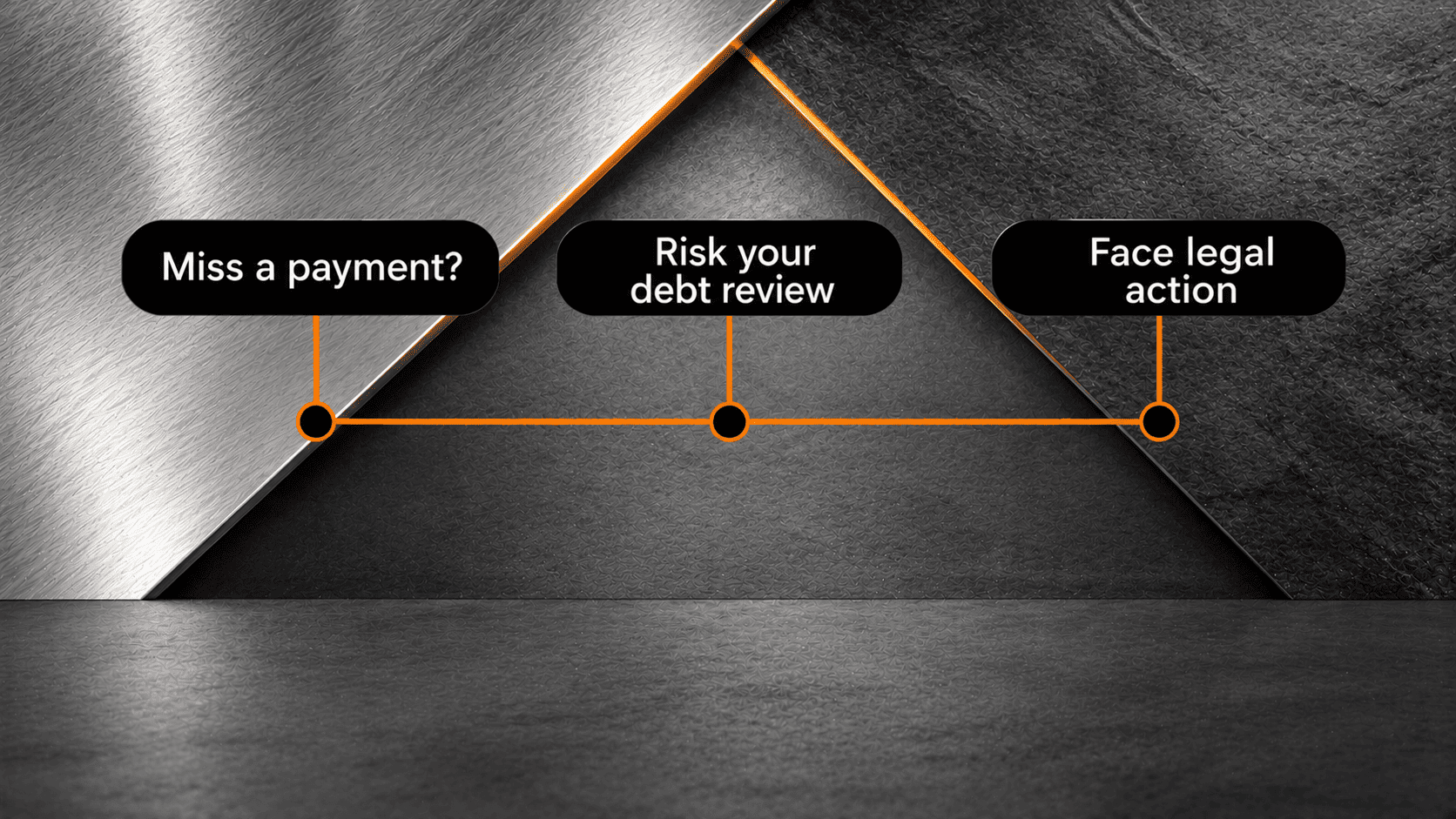
Your debt review plan depends on you making your agreed payments. With that in mind, not paying your debt review can have serious consequences.
You could fall further behind and lose legal protection against debt enforcement.
If you’re struggling to make your debt review payments in South Africa, remember that simply stopping payment doesn’t make your debt disappear or automatically remove your debt review flag.
Here are some of the legal facts of the matter:
Your credit providers may take legal action. Under the National Credit Act, credit providers may take legal action if you default on your agreed repayments.
The legal implications of a debt review default can include a court summons, judgment, or even repossession of an asset. That’s anything you’ve bought on credit.
And it can go further.
If a creditor gets the necessary court order, a sheriff may be able to attach other belongings in your home to recover the debt. However, the law protects some essential household items.
These aren’t automatic penalties. What happens depends on your agreement and the applicable legal process.
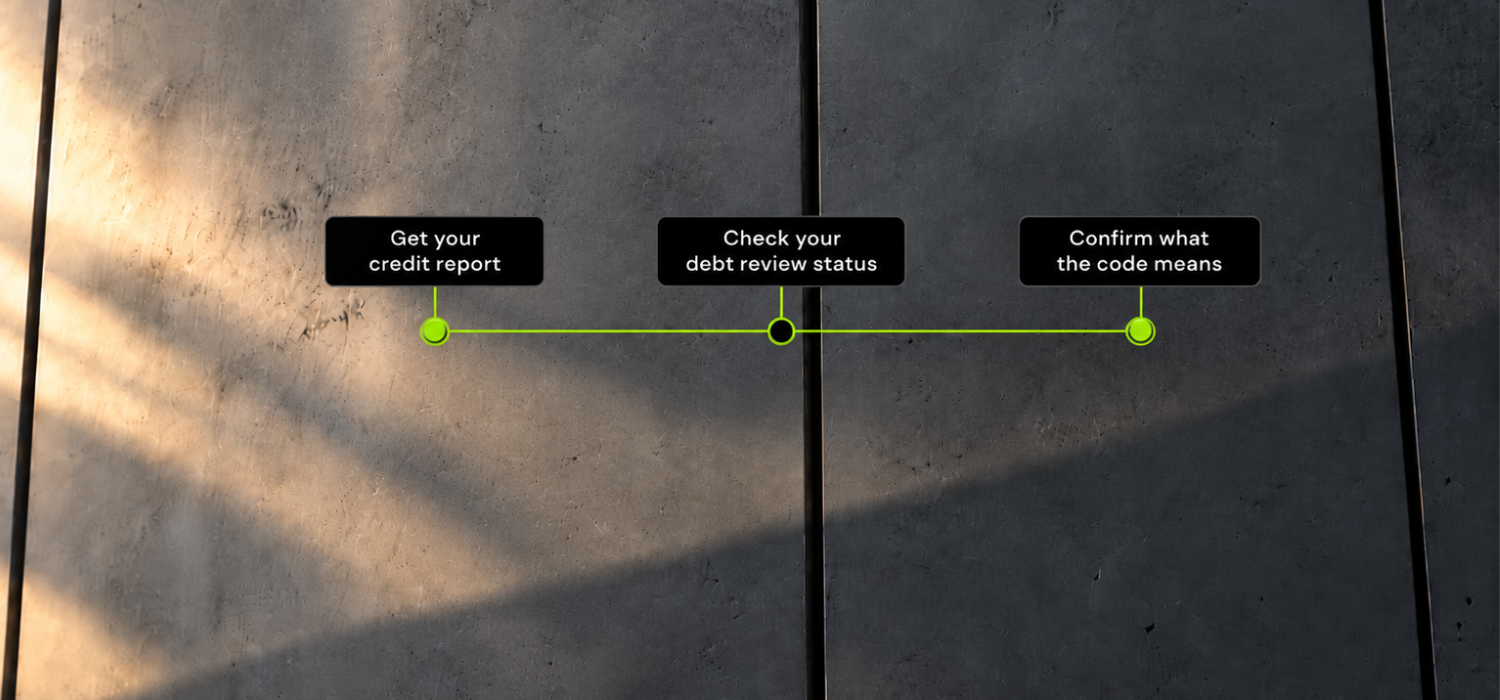
Your debt review status also stays on your credit record until you meet the legal requirements to remove it. This can affect your ability to access credit in the future.
There may be ways to make your payments manageable again
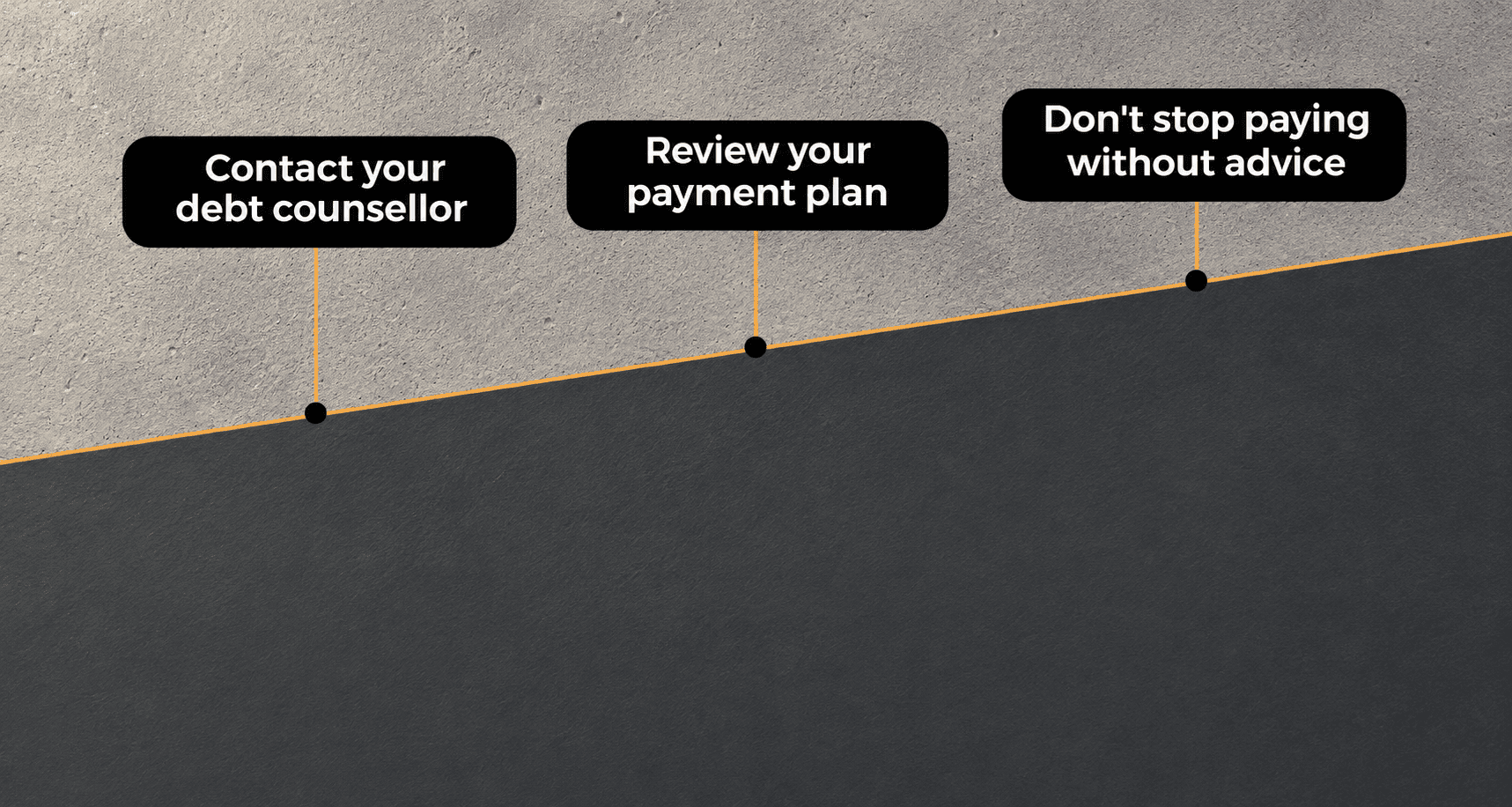
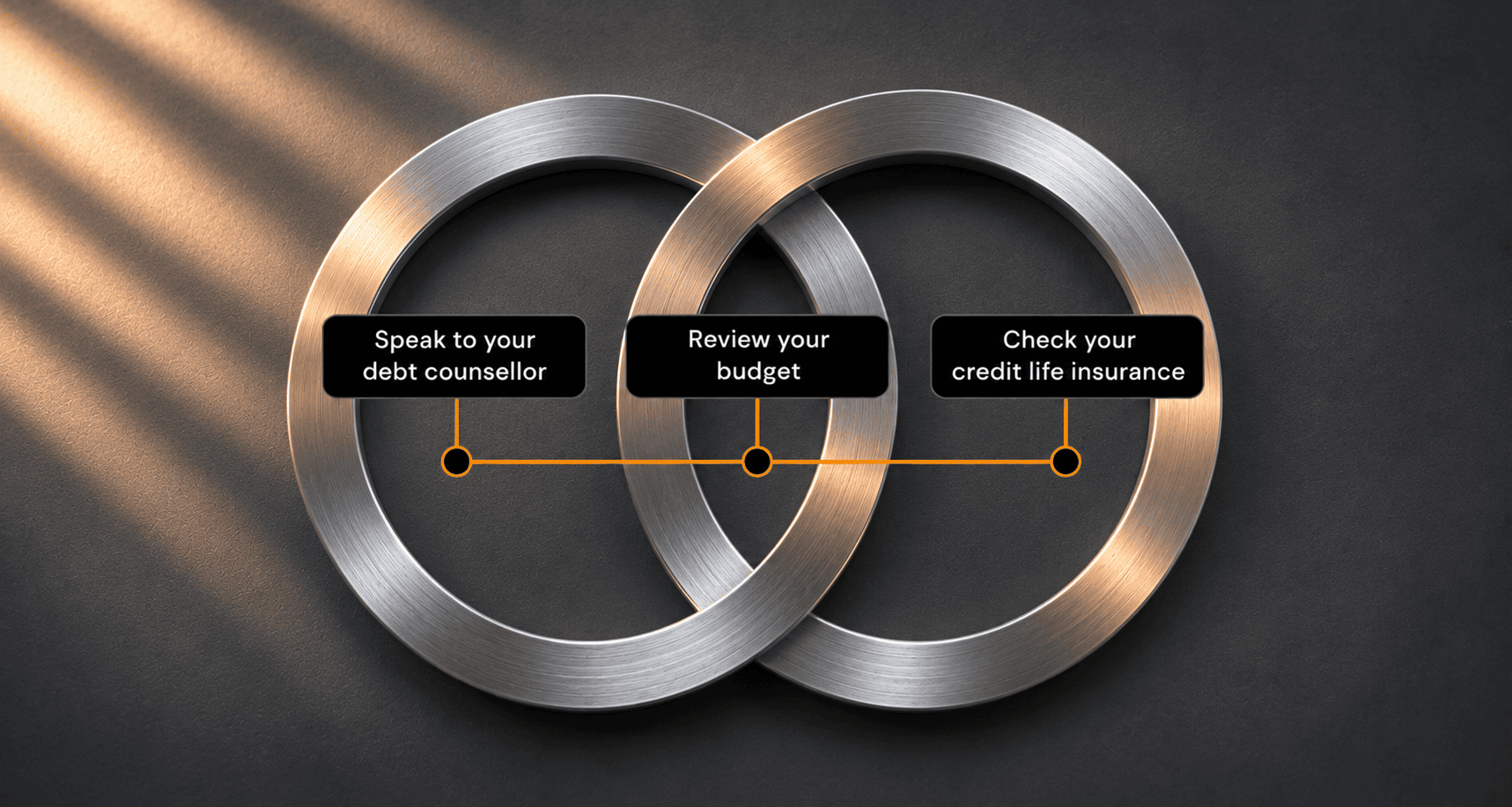
If you genuinely can’t afford your debt review payments anymore, speak to your debt counsellor immediately.
Here are a few options worth discussing:
- Review your budget: Your counsellor can assess what has changed and whether a different repayment arrangement may be possible.
- Ask about changing your payment plan: Credit providers may need to agree, and changes to a court order may require court approval.
- Check your credit life insurance: Depending on your policy, you may have cover if you’ve been retrenched or become unable to work.
- Consider selling something you no longer need: The money could help settle part of your debt. Remember to get advice before selling any asset linked to a credit agreement.
Don’t try to solve the problem by borrowing from a loan shark. New credit is generally restricted while you’re under debt review.
Leaving debt review isn’t as simple as clicking “unsubscribe”
You may be wondering whether you can just cancel debt review and start again.
The process is complex, and removing yourself from debt review in South Africa depends on how far you’ve progressed and whether you meet the legal requirements.
If a court order is already in place, you generally can’t simply withdraw. In certain circumstances, you may need to go to court, and your debt counsellor can issue a certificate known as Form 19 only once you meet the clearance requirements.
As a rule, be careful of anyone promising instant debt review removal for a fee.
If you’re not sure about your rights or have a complaint, contact the National Credit Regulator (NCR) for guidance. Most importantly, get advice before making a decision that could leave you in more debt.
Need help finding a way forward?
If your debt review payments have become unaffordable, speak to your debt counsellors about your situation and the options available to you.
You can also get your free Finance365 credit report to see what’s recorded in your name.